
Complete Guide to AI-Powered Automated Trading (2026)
An artificial intelligence trading bot is a smart software system that uses AI technologies to analyze financial markets and automate trading decisions. By processing large amounts of data, it can identify market patterns, evaluate potential opportunities, and execute trades faster than manual methods. In addition, these bots help traders reduce emotional decisions by following data-based strategies. They can be used across different markets, including stocks, cryptocurrencies, forex, and commodities. However, AI trading bots do not guarantee profits and still involve risks. This guide explains how they work, their benefits, limitations, and how to choose the right solution for your trading goals.
What Is an Artificial Intelligence Trading Bot?
An artificial intelligence trading bot is software that uses AI technologies such as machine learning, data analysis, and predictive algorithms to analyze financial markets and execute trades automatically based on predefined strategies or learned patterns.
Unlike traditional trading software that relies on fixed rules, AI trading bots can continuously process new market data and adjust their decisions as conditions change. In addition, some advanced platforms use deep learning and natural language processing (NLP) to evaluate financial news, economic reports, and social media sentiment before placing trades. As a result, they can respond to market changes more intelligently than rule-based systems.
Ultimately, the primary goal of an AI trading bot is to identify potential trading opportunities while reducing the impact of human emotions such as fear and greed. However, it is important to remember that no AI trading bot can accurately predict every market movement or guarantee consistent profits. Instead, these tools are designed to support better decision-making by analyzing large amounts of data quickly and efficiently.
How an AI Trading Bot Differs from Traditional Trading Bots
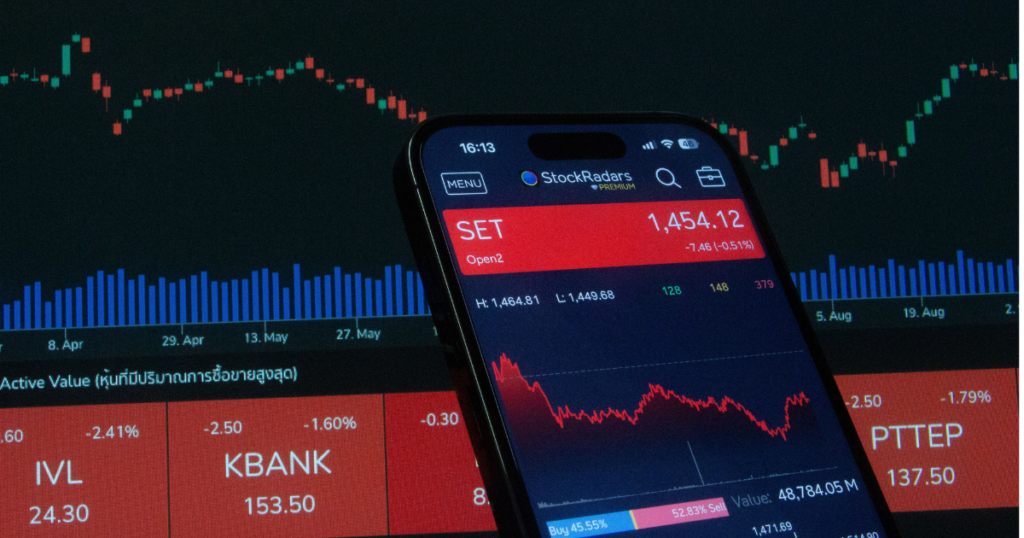
Traditional trading bots only follow specific rules set by their creators. For instance, a traditional bot can be programmed to buy a stock whenever its price crosses above the rising moving average and sell it when the price crosses below the falling moving average.
On the other hand, an AI trading bot uses rules and data to execute trades. Here are a few ways that an AI trading bot differs from traditional bots:
1. AI bots can learn
Using historical price charts and other data, these bots can detect patterns and develop strategies that enable them to make profits in the long run.
2. AI bots can adapt
Unlike traditional trading bots, AI can adapt to changing market conditions.
3. AI bots can analyze multiple data sets
These bots can analyze various data sets at once, unlike traditional bots that only use technical analysis to detect trading opportunities.
4. AI trading bots can be trained
While you cannot train traditional trading bots, you can train AI trading bots to make profitable trades based on the data you feed them.
How does the artificial intelligence make trading decisions?
An artificial intelligence trading bot analyzes multiple types of market data before deciding whether to buy, sell, or hold an asset. Instead of relying on a single signal, it evaluates different data sources to identify potential trading opportunities and market trends.
Some of the most common data analyzed by AI trading bots include:
- Historical price trends
- Trading volume
- Technical indicators
- Price charts
- Financial news and economic events
- Market sentiment
- Blockchain data for cryptocurrencies
Once the data is collected, machine learning algorithms analyze patterns and estimate the probability of future price movements. As a result, the bot can make trading decisions based on data rather than emotions. However, no AI trading bot can predict the market with complete accuracy because financial markets are influenced by unexpected events and changing economic conditions. Therefore, traders should use AI as a decision-support tool and combine it with proper risk management instead of relying on it alone.
How Does an AI Trading Bot Work?
Having learned what an AI trading bot is, it is now time to discuss how it works.
1. Data collection and market analysis
An AI trading bot works by first collecting and analyzing data. The most effective AI trading bots gather data from the financial market and analyze it before using it to detect patterns that will enable it to make profits.
The data collected includes the following:
• Price chart
• Market data
• Trading volume
• Market sentiment
• Market indicators
• News
The more data an AI bot collects, the more accurate its predictions are likely to be.
2. AI Algorithms and Machine Learning in Automated Trading
The next step is to detect patterns using the data collected. At this stage, AI uses machine learning algorithms to find historical patterns that are likely to repeat in the future.
Some of the techniques used at this stage include regression analysis, neural networks, decision trees, pattern recognition, and reinforcement learning.
Unlike traditional bots that analyze historical data, AI trading bots attempt to calculate the likelihood of each possible outcome.
3. Trade execution and risk management
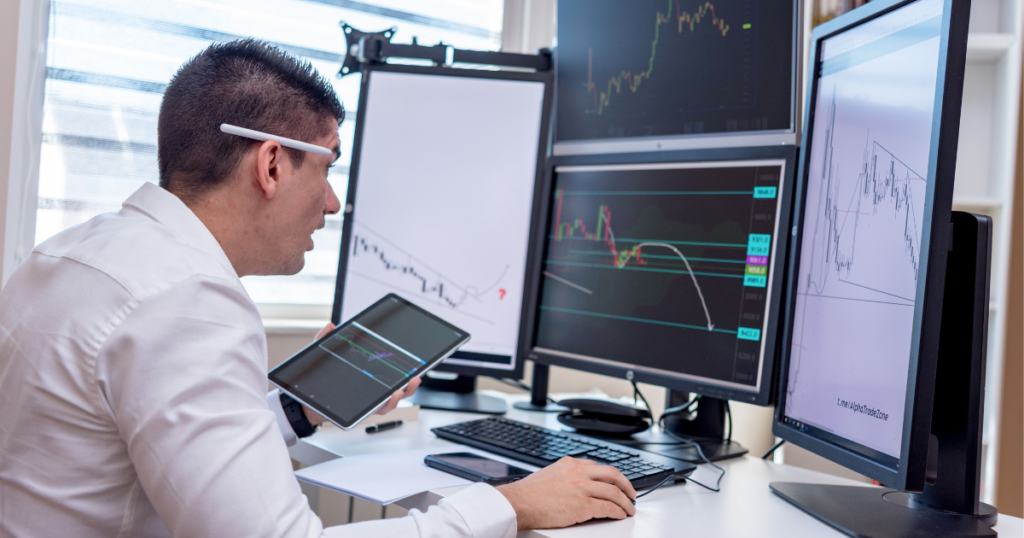
An artificial intelligence trading bot analyzes different types of market data before deciding whether to buy, sell, or hold an asset. Rather than relying on a single indicator, it combines multiple data sources to identify market trends and potential trading opportunities more accurately.
The most common data analyzed by AI trading bots includes:
- Historical price trends
- Trading volume
- Technical indicators
- Price charts
- Financial news and economic events
- Market sentiment
- Blockchain data for cryptocurrencies
After gathering this information, machine learning algorithms look for patterns and estimate the likelihood of future price movements. As a result, the bot can make trading decisions based on data instead of emotions. However, no artificial intelligence trading bot can predict the market with complete accuracy because financial markets are affected by unexpected news, economic events, and investor behavior. Therefore, traders should treat AI as a tool to support decision-making and always combine it with a well-planned risk management strategy.
Key Features of an Artificial Intelligence Trading Bot
Most AI trading bots that are available in the market today possess the following features:
1. Constant monitoring of the financial market
An AI trading bot constantly monitors the financial market so that it can detect trading opportunities as soon as they arise.
These bots usually perform this task better than humans since they do not get bored or tired. This is especially true for crypto trading bots that work around the clock.
2. Automated trading strategies
The best AI trading bots allow you to automate your trading strategies.
Currently, these bots possess advanced strategies that can be used to carry out trend following, grid trading, mean reversion, scalping, portfolio rebalancing, arbitrage, and momentum trading. Most of the best AI trading bots allow you to customize these algorithms.
3. Portfolio and risk management
The most effective AI trading bots offer excellent portfolio and risk management tools. These tools help you to manage your investments efficiently while also ensuring that your capital is protected.
Pros and Cons of Using An AI Trading Bot

Pros of AI trading bots include the following:
1. Speed
A good AI trading bot can help you execute multiple trades in a short time. This is because these bots can analyze several data sets and come up with trading decisions within a fraction of a second.
2. Automation
Using an AI trading bot to execute trades is much faster than doing it manually. These bots can help you analyze and execute multiple trades at once.
3. Reduce the impact of human error
An AI trading bot does not experience anxiety, doubt, or fear like humans do. As a result, you can use it to reduce the impact of human error.
4. Help analyze massive amounts of data
An AI trading bot can analyze thousands of data sets at a time. This would be very difficult if you were using traditional trading bots.
Cons of AI trading bots include:
1. They do not eliminate risk
Even the best AI trading bots cannot eliminate risks. For instance, if you decide to use an AI trading bot to make high-frequency crypto trades, it will not be able to eliminate price volatility.
2. Market volatility
Markets can be highly unpredictable and, at times, extremely volatile. During such periods, an AI trading bot is not likely to predict market movements accurately.
3. Overfitting
Many new traders fall into the trap of using an AI trading bot to predict future price movements using historical data. The truth is that the future is never a replica of the past.
4. Security risks
Unfortunately, the popularity of AI trading bots has attracted fraudsters. Therefore, you have to be wary of scams when searching for the best AI trading bot.
How to Choose the Best AI Trading Bot
The following guidelines can help you choose the best AI trading bot:
1. Check the level of security
Most importantly, ensure that the AI trading bot that you choose is secure. Only deal with reputable companies to avoid getting scammed.
If you are not familiar with a specific company, check online reviews to learn what other people are saying about them.
2. Go for bots that provide backtesting
You need to choose a bot that provides historical backtesting data. At the same time, ensure that the bot also offers forward testing, drawdown stats, and win rates.
3. Consider their features and cost
Compare the features and costs of the different AI trading bots that you are considering buying. You need to find a bot that offers you the best value for your money.
Some of the bots may charge you high subscription fees, while others may lack useful features. Therefore, it is crucial to carefully evaluate your options.
Best Use Cases for An AI Trading Bot
An AI trading bot can be used for various purposes. These bots can be used in stock, crypto, forex, and commodity trading.
AI trading bots are ideal for:
1. Stock trading
Using an AI trading bot for stock trading can help you analyze stock performances and detect trading strategies that can help you generate profits.
2. Crypto trading
AI trading bots can be used for high-frequency crypto trading. This is because these bots have the following advantages:
1. They are always on standby.
2. They can detect trading opportunities within seconds.
3. They can execute multiple trades within a short time.
3. Forex trading
An AI trading bot can be used for forex trading. With this kind of trading, multiple currencies are involved. Fortunately, these bots can analyze the forex market and help you generate profits.
AI Trading Bot vs Traditional Trading Bot
The table below shows some of the key differences between an AI trading bot and a traditional trading bot.
| Feature |
|——–|
| AI Trading Bot |
| Traditional Trading Bot |
| Can analyze multiple data sets |
| Only analyze technical indicators |
| Can learn and adapt |
| Cannot learn or adapt |
| Can be trained |
| Cannot be trained |
| More accurate |
| Less accurate |
| Can execute trades on its own |
| Can execute trades on its own |
| More complex |
| Less complex |
As can be seen from the table, an AI trading bot is better than a traditional trading bot. In case you are deciding between the two, you should definitely choose an AI trading bot.
Best Practices When Using An AI Trading Bot
To get the most out of an AI trading bot, it is important to remember the following best practices:
1. First, practice using the bot with a demo account before using it with real money.
2. When using an AI trading bot, only invest money that you are willing to lose.
3. Keep track of how your AI trading bot is performing.
4. Update your trading strategy regularly.
5. Rather than relying on a single trading strategy, it is always better to use multiple strategies to make profits.
6. Lastly, it is always important to continue learning about trading.
The Future Of AI Trading Bots
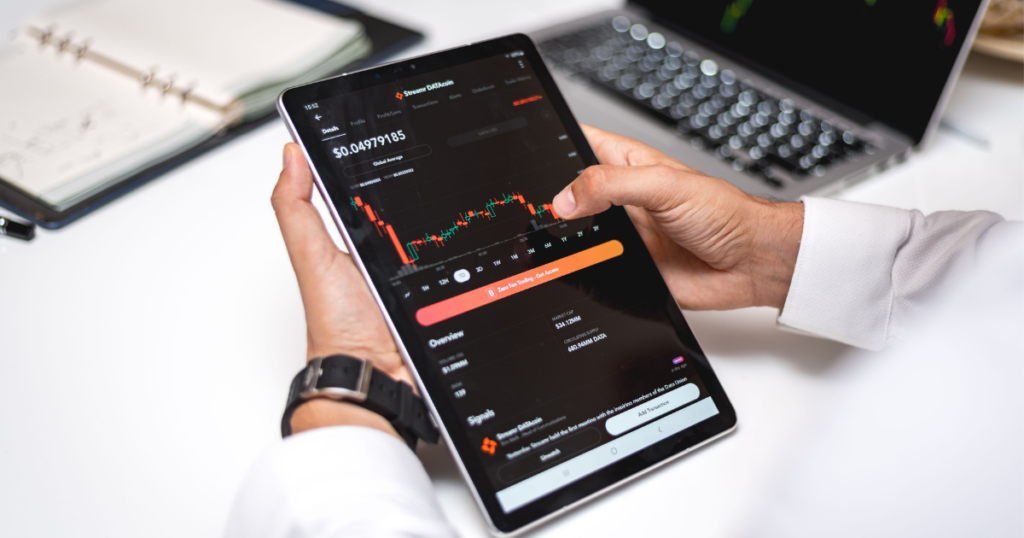
Artificial intelligence trading bots are expected to play an even bigger role in financial markets as AI technology continues to evolve. As machine learning models become more advanced and access to real-time market data improves, these bots will be able to analyze information faster and support more informed trading decisions.
In the coming years, AI trading bots are also likely to offer better risk management, improved predictive models, and more personalized trading strategies. At the same time, increased regulatory oversight may encourage developers to build platforms that are more secure, transparent, and reliable for users.
However, AI should be viewed as a tool rather than a replacement for human judgment. Successful traders will continue to combine AI-powered automation with market knowledge, realistic expectations, and disciplined risk management. By using these tools wisely, traders can improve efficiency while maintaining greater control over their investment decisions.
Conclusion
Artificial intelligence trading bots have made automated trading more accessible by combining advanced data analysis with fast trade execution. They can monitor market conditions, identify potential opportunities, and help traders make more informed decisions while reducing the influence of emotions. However, no AI trading bot can guarantee profits or completely remove the risks associated with financial markets.
Before choosing an artificial intelligence trading bot, take the time to compare its features, security measures, supported markets, and risk management tools. In addition, consider testing the platform with a demo account to understand how it performs under different market conditions. By combining AI technology with proper research, realistic expectations, and disciplined risk management, you can use these tools more effectively and make smarter trading decisions over the long term.